
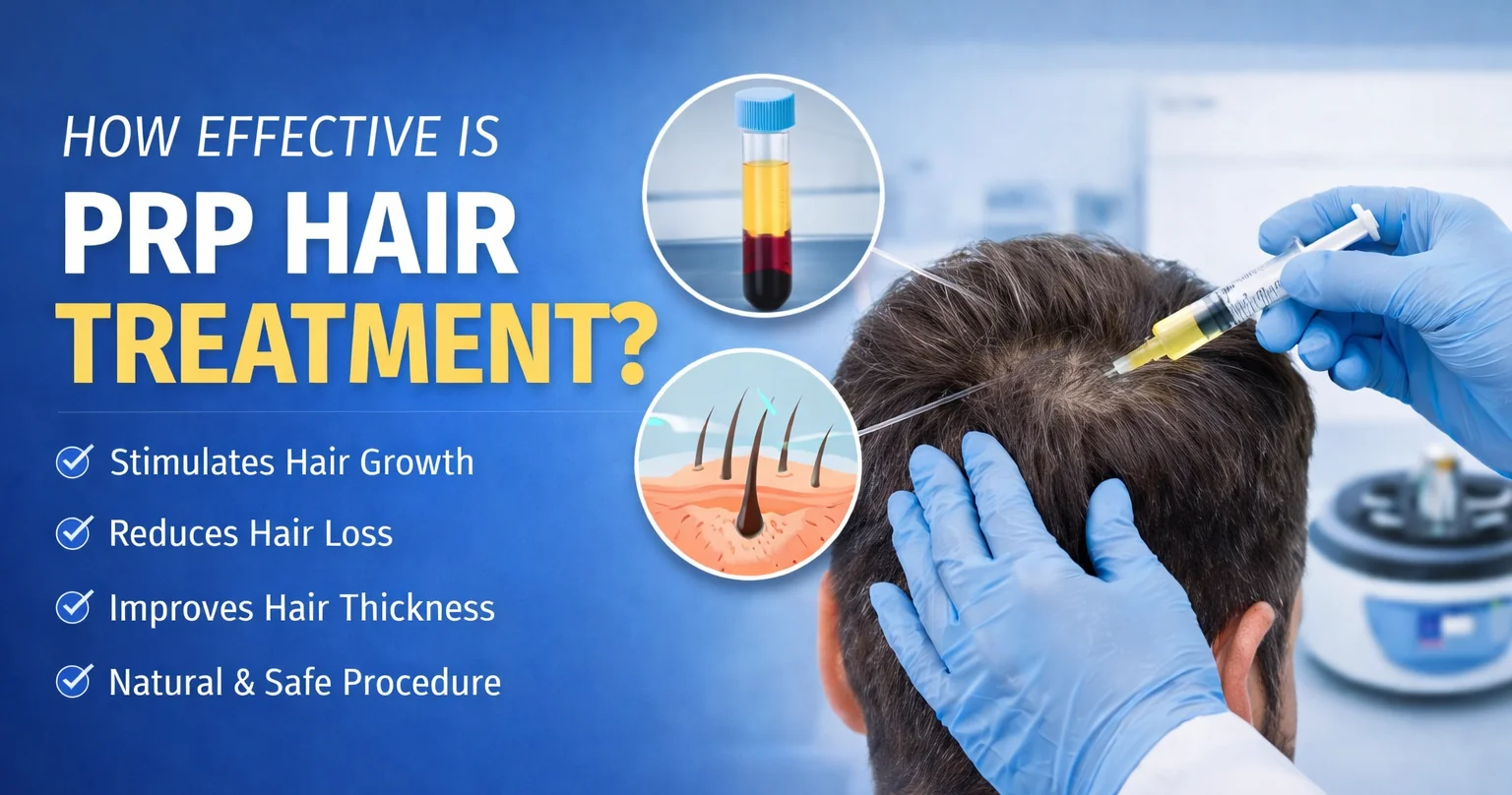
Hair fall, thinning, and visible scalp patches don't just affect your appearance, they quietly chip away at your confidence. You may start avoiding mirrors, styling your hair differently to hide thinning areas, or worrying every time you see strands on your pillow or in the shower drain. Many people try oils, supplements, and home remedies, only to feel disappointed when results don't last. This is exactly where advanced medical solutions like PRP hair treatment come in. At Kapadia Multispeciality Hospital, PRP therapy is performed under medical supervision using evidence-based protocols, making it a safe, effective, and increasingly popular option for men and women struggling with hair loss.
But how effective is PRP hair treatment really? Let's break it down in a simple, honest, and medically accurate way.
What Is PRP Hair Treatment?
PRP stands for Platelet-Rich Plasma. It is a treatment that uses your own blood to stimulate hair growth and improve hair thickness and quality.
Blood contains red blood cells, white blood cells, plasma, and platelets. Platelets are rich in growth factors such as natural substances that help in healing, tissue repair, and regeneration. In PRP hair treatment, these platelets are concentrated and injected into areas of the scalp affected by hair thinning or hair loss.
Because PRP uses your own blood, the treatment is biocompatible, safe, and low-risk when done under proper medical conditions.
Why PRP Has Become So Popular for Hair Loss
Hair loss can be caused by many factors such as genetics, hormonal changes, stress, nutritional deficiencies, medical conditions, or aging. Traditional treatments often focus on slowing hair fall. PRP, however, aims to stimulate dormant hair follicles and improve the health of existing ones.
People choose PRP because:
- It is non-surgical
- It has minimal downtime
- It uses the body's natural healing mechanisms
- It can be combined with other hair loss treatments
- It focuses on improving hair quality, thickness, and density
How PRP Hair Treatment Works
Understanding how PRP hair treatment works makes it easier to see why it can be effective. Here is the step-by-step process for hair PRP treatment at Kapadia Hospital.
1. Blood Collection
A small amount of blood is drawn from your arm, just like a routine blood test.
2. Centrifugation
The blood is placed in a special machine called a centrifuge. This machine spins the blood at high speed to separate the platelet-rich plasma from other components.
3. Preparation of PRP
The concentrated platelet-rich plasma is collected in a syringe. This plasma is rich in growth factors that promote healing and tissue regeneration.
4. Injection into the Scalp
The PRP is carefully injected into areas of the scalp where hair thinning or hair loss is present.
This entire process typically takes 45 to 60 minutes and is done as an outpatient procedure.
What Happens in PRP Treatment?
If you're wondering what happens in PRP treatment, here's what you can expect as a patient:
- Your scalp is cleaned and prepared
- A local numbing agent may be applied for comfort
- The PRP is injected into targeted areas of the scalp
- You may feel mild pinpricks or pressure, but discomfort is usually minimal
- You can return to normal activities the same day or the next day
There may be slight redness or mild swelling for a short time, but this usually settles quickly.
How PRP Hair Treatment Works on a Biological Level
To explain again in simpler terms, how PRP hair treatment works is by:
- Increasing blood supply to hair follicles
- Stimulating dormant or weak hair follicles
- Prolonging the growth (anagen) phase of the hair cycle
- Improving hair shaft thickness and strength
- Reducing excessive hair fall over time
The growth factors in PRP essentially "wake up" struggling hair follicles and support healthier, stronger hair growth.
What Are the Benefits of PRP Treatment?
Patients often ask, what are the benefits of PRP treatment? Here are the key advantages:
1. Reduces Hair Fall
PRP strengthens hair roots, which helps reduce excessive shedding over time.
2. Improves Hair Thickness
Many patients notice that their hair becomes thicker and fuller after a few sessions.
3. Enhances Hair Quality
Hair often feels stronger, shinier, and healthier because the follicles are better nourished.
4. Stimulates New Hair Growth
PRP can help activate dormant follicles, leading to new hair growth in thinning areas.
5. Safe and Natural
Since PRP uses your own blood, the risk of allergic reactions or major side effects is very low.
6. Non-Surgical and Low Downtime
There are no cuts, stitches, or long recovery periods. You can return to your routine quickly.
How Effective Is PRP Hair Treatment?
Now to the most important question: How effective is PRP hair treatment?
The effectiveness of PRP depends on several factors:
- The cause of hair loss (genetic, hormonal, stress-related, etc.)
- The stage of hair loss (early thinning responds better than advanced baldness)
- The number of sessions completed
- The overall health and lifestyle of the patient
- The technique and medical expertise of the clinic
In general, PRP works best for:
- Early to moderate hair thinning
- Androgenetic alopecia (male and female pattern hair loss)
- Hair fall due to stress or nutritional issues (after addressing the root cause)
Most patients start noticing:
- Reduced hair fall in 2–3 months
- Improved texture and thickness in 3–6 months
- Visible improvement in density after multiple sessions
PRP is not a magic overnight cure, but with proper sessions and maintenance, it can produce significant and natural-looking improvements.
Who Is an Ideal Candidate for PRP Hair Treatment?
You may be a good candidate if:
- You are experiencing early or moderate hair thinning
- You still have active hair follicles
- You want a non-surgical hair restoration option
- You prefer a natural, low-risk treatment
- You are in generally good health
PRP may be less effective if:
- There is complete baldness with no active follicles
- Hair loss is due to untreated medical conditions
- There are certain blood disorders or platelet issues
A proper consultation at Kapadia Multispeciality Hospital helps determine whether PRP is right for you.
How Many PRP Sessions Are Needed?
Typically:
- An initial course of 3 to 4 sessions is recommended
- Sessions are spaced 4 to 6 weeks apart
- Maintenance sessions may be advised every 6 to 12 months
Your doctor will customize the plan based on your hair condition and response to treatment.
What to Avoid After PRP Hair Treatment
Following the right aftercare is crucial for good results. If you're asking what to avoid after PRP hair treatment, here are the key points:
- Avoid washing your hair for 24 hours after the procedure
- Avoid heavy exercise or sweating for 24–48 hours
- Do not use harsh hair products or chemicals for a few days
- Avoid direct sun exposure on the scalp immediately after treatment
- Do not massage or scratch the treated area for at least 24 hours
- Avoid smoking and excessive alcohol, as they can slow healing
Following these guidelines helps the scalp heal properly and improves the effectiveness of the treatment.
PRP vs Other Hair Loss Treatments
PRP can be used alone or in combination with other treatments like:
- Medications for hair loss
- Topical solutions
- Nutritional therapy
- Hair transplant procedures (to improve graft survival and healing)
Compared to purely cosmetic or temporary solutions, PRP focuses on improving the health of your own hair follicles, making it a more regenerative and long-term approach.
Why Choose Kapadia Multispeciality Hospital for PRP Hair Treatment?
At Kapadia Multispeciality Hospital, PRP treatment in Mumbai is performed with:
- Proper medical evaluation and diagnosis
- High-quality sterile equipment and protocols
- Experienced medical professionals
- Personalized treatment plans based on your hair condition
- A patient-first approach focused on safety, results, and long-term care
Hair loss is not just a cosmetic issue, it often affects confidence, self-image, and quality of life. Getting treated in a trusted medical environment ensures you receive ethical, evidence-based, and effective care.
Conclusion
So, how effective is PRP hair treatment? For the right candidate, at the right stage of hair loss, and when performed by qualified medical professionals, PRP can be a highly effective, safe, and natural solution to reduce hair fall, improve hair thickness, and stimulate healthier hair growth.
If you are noticing thinning hair, increased shedding, or reduced hair volume, don't wait until the problem becomes advanced. Early intervention always delivers better results.
At Kapadia Multispeciality Hospital, you can get a proper diagnosis, honest guidance, and a customized PRP treatment plan designed to help you regain not just your hair, but also your confidence. Contact us now to know more about PRP treatments.
Frequently Asked Questions
Is PRP hair treatment painful?
Most patients experience only mild discomfort. A numbing agent is usually applied to make the procedure comfortable.
Are there any side effects of PRP Hair Treatment?
Side effects of PRP hair treatment are minimal and may include mild redness, swelling, or tenderness, which usually settles within a day or two.
When will I see results?
Initial improvements may be seen in 2–3 months, with more noticeable results after 4–6 months and multiple sessions.
Is PRP treatment permanent?
PRP improves hair health and growth, but maintenance sessions are often needed to sustain results, especially in genetic hair loss.
Can PRP hair treatment be combined with other hair loss treatments?
Yes, PRP hair treatment can be safely combined with other treatments such as medications, topical solutions, nutritional therapy, or even hair transplant procedures. In fact, combination therapy often improves overall results by addressing hair loss from multiple angles.
Is PRP hair treatment suitable for women as well as men?
Absolutely. PRP hair treatment is effective for both men and women experiencing hair thinning or hair fall, especially in cases of early to moderate hair loss. Women with diffuse thinning often respond particularly well to PRP therapy.
Will PRP hair treatment change my hairline?
PRP treatment for hair primarily improves the health, thickness, and density of existing hair and helps stimulate weak or dormant follicles. It does not dramatically redesign the hairline like a hair transplant, but it can make thinning areas look fuller and healthier.
Do I need any tests before starting PRP hair treatment?
In some cases, your doctor may recommend basic blood tests to rule out underlying causes such as anemia, vitamin deficiencies, or hormonal issues. Treating these conditions alongside PRP can significantly improve your results.
What happens if I stop PRP maintenance sessions?
If you stop maintenance sessions, the hair you gained or strengthened with PRP may gradually return to its natural progression of hair loss over time, especially in genetic hair loss. Maintenance sessions help sustain and prolong your results.
This article is for general awareness only. It does not replace a consultation, examination, diagnosis or treatment by a qualified doctor.