
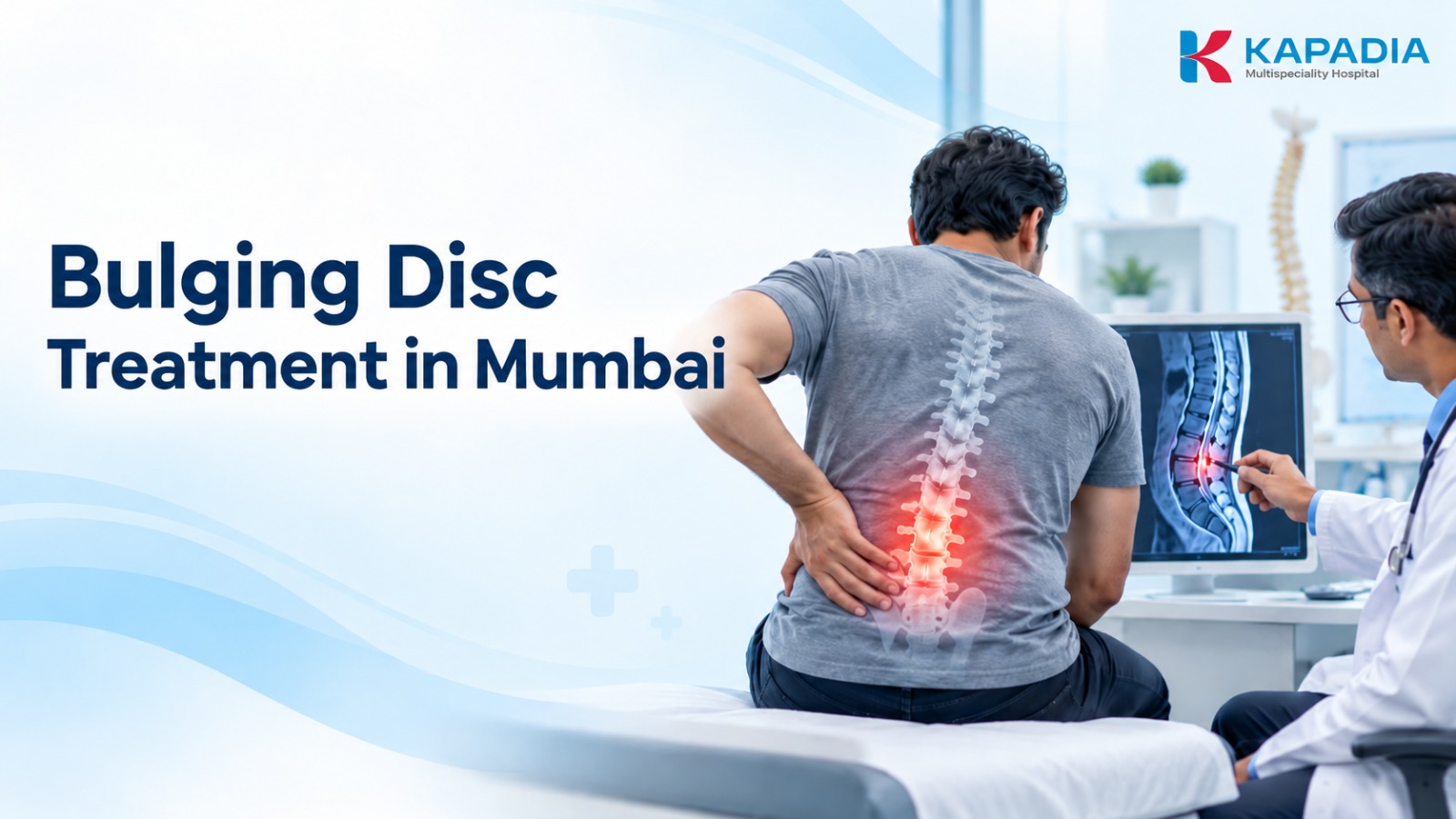
A bulging disc can cause back pain, neck pain, stiffness, numbness or pain that travels into the arms or legs. It can affect daily activities such as sitting, walking, bending, lifting or even sleeping comfortably.
For people looking for bulging disc treatment in Mumbai, getting the right diagnosis is important because not every disc problem needs surgery. Depending on the condition, treatment may include medicines, physiotherapy, lifestyle changes, injections or surgery when required.
Kapadia Multispeciality Hospital in Goregaon West, Mumbai provides evaluation and treatment for different spine-related problems, including bulging discs, slip discs, back pain and nerve-related symptoms. Patients searching for a spine surgery hospital in Mumbai can also consult the hospital for specialist evaluation and suitable treatment options based on their condition.
What Is a Bulging Disc?
The spine is made up of bones called vertebrae. Between these bones are soft discs that work like cushions and help the spine move smoothly.
When one of these discs becomes weak or starts pushing outward from its normal position, it is called a bulging disc. A bulging disc may not always cause pain. Symptoms usually develop when the bulging disc puts pressure on or irritates a nearby nerve.
Patients experiencing repeated back pain or nerve-related symptoms can consult a spine specialist at Kapadia Multispeciality Hospital, Goregaon, for proper evaluation.
Is a Bulging Disc the Same as a Slip Disc?
A bulging disc and a slip disc are often used as similar terms, but medically they may not always mean exactly the same thing.
A bulging disc usually means that part of the disc has moved outward from its normal position. A herniated or slipped disc may occur when the softer material inside the disc pushes through the outer layer.
People searching for slip disc treatment in Mumbai may experience symptoms similar to a bulging disc, such as back pain, leg pain, numbness or tingling.
A doctor may recommend a physical examination and, if required, an MRI to understand the exact condition before starting treatment.
What Are the Common Symptoms of a Bulging Disc?
Symptoms can vary depending on where the bulging disc is located and whether it is affecting a nearby nerve.
Common symptoms may include:
- Lower back pain
- Neck pain
- Pain travelling down one leg
- Pain travelling into the arm or shoulder
- Numbness or tingling
- Muscle weakness
- Difficulty bending or lifting
- Pain after sitting for long periods
- Stiffness in the back or neck
Some people may have a bulging disc on an MRI without having any major symptoms. This is why a medical examination is important before deciding on treatment.
What Causes a Bulging Disc?
A bulging disc may develop gradually due to wear and tear in the spine. It can also occur because of repeated pressure or strain.
Some common factors include:
- Age-related changes in the spine
- Poor sitting posture
- Lifting heavy objects incorrectly
- Sitting for long hours
- Repeated bending or twisting
- Being overweight
- Previous back injuries
- Physically demanding work
Making simple changes in posture and daily activity may help reduce unnecessary pressure on the spine.
How Is a Bulging Disc Diagnosed?
Diagnosis usually begins with understanding the patient's symptoms and medical history. The doctor may ask where the pain begins, whether it travels into the legs or arms, and whether there is numbness or weakness.
A physical examination may also be performed to check movement, muscle strength and nerve function.
If required, an MRI may be advised to understand the condition of the discs and nerves in more detail.
Patients looking for a spine evaluation in Goregaon can visit Kapadia Multispeciality Hospital in Goregaon West, Mumbai, where spine-related conditions can be assessed based on symptoms and diagnostic findings.
What Are the Treatment Options for a Bulging Disc?
The right bulging disc treatment in Mumbai depends on the severity of symptoms, the location of the affected disc and whether a nerve is being compressed.
In many cases, treatment starts with non-surgical methods.
1. Medicines
Doctors may recommend pain-relieving or anti-inflammatory medicines to help manage pain and inflammation.
Some patients may also require medicines for muscle spasms or nerve-related pain. Medicines should always be taken as advised by a qualified doctor.
2. Physiotherapy
Physiotherapy is commonly used as part of bulging disc treatment.
A physiotherapy programme may include exercises to improve flexibility, strengthen muscles that support the spine and improve posture.
The aim is to reduce strain on the spine and help the patient return gradually to normal activities.
3. Activity and Lifestyle Changes
Patients may be advised to avoid activities that increase pain, especially heavy lifting or repeated bending.
Simple lifestyle changes may include:
- Improving sitting posture
- Taking breaks from prolonged sitting
- Avoiding sudden heavy lifting
- Maintaining a healthy weight
- Performing doctor-recommended exercises
- Using proper lifting techniques
Complete bed rest for long periods is generally not recommended unless specifically advised by a doctor.
4. Spinal Injections
For some patients, nerve pain may continue even after medicines and physiotherapy.
In such cases, a specialist may consider injections to reduce inflammation around the affected nerve. This depends on the patient's condition and should only be done after medical evaluation.
When Is Surgery Needed for a Bulging Disc?
Not every patient with a bulging disc needs surgery.
Surgery may be considered if the pain remains severe despite appropriate non-surgical treatment or if the disc is causing significant pressure on a nerve.
A doctor may also consider surgery if there is increasing weakness, difficulty walking or other neurological symptoms.
Patients who need specialist evaluation can learn more about spine surgery in Mumbai at Kapadia Multispeciality Hospital in Goregaon West.
Depending on the condition, the spine specialist may recommend a suitable surgical approach after examining the patient and reviewing diagnostic reports.
When Should You Consult a Spine Specialist?
Occasional back pain may improve with rest and basic care, but repeated or persistent symptoms should not be ignored.
You should consider consulting a doctor if:
- Back or neck pain lasts for several weeks
- Pain keeps coming back
- Pain travels into the arm or leg
- You experience numbness or tingling
- You notice muscle weakness
- Walking becomes difficult
- Pain is affecting normal daily activities
Urgent medical attention may be needed if there is sudden loss of bladder or bowel control, severe weakness or numbness around the groin area.
Bulging Disc Treatment in Goregaon, Mumbai
For patients living in Goregaon and nearby areas, access to timely spine care can make diagnosis and follow-up more convenient.
Kapadia Multispeciality Hospital is located in Goregaon West, Mumbai, and provides care for patients with back pain, spine problems, bulging discs and slip discs.
Patients looking for bulging disc treatment in Goregaon or slip disc treatment in Mumbai can consult the hospital for evaluation and suitable treatment based on their condition.
Kapadia Multispeciality Hospital also offers broader orthopaedic care. Patients can explore the hospital's orthopedic services in Mumbai for bone, joint and musculoskeletal problems.
Why Choose Kapadia Multispeciality Hospital for Spine Care?
Kapadia Multispeciality Hospital in Goregaon West, Mumbai provides access to multiple medical specialties under one roof, making it easier for patients who may require coordinated care.
For spine-related conditions, the treatment plan is based on the patient's symptoms, physical examination and diagnostic reports.
The focus is on selecting an appropriate treatment approach rather than assuming that every disc problem requires surgery.
Patients looking for bulging disc treatment in Mumbai can visit Kapadia Multispeciality Hospital for consultation and guidance regarding suitable non-surgical or surgical options.
Frequently Asked Questions
Can a bulging disc get better without surgery?
Yes. Many patients with a bulging disc may improve with medicines, physiotherapy, activity changes and proper spine care. Surgery is usually considered only when required based on symptoms and nerve involvement.
Which doctor should I consult for a bulging disc?
A spine specialist or orthopaedic doctor can evaluate bulging disc symptoms and recommend suitable treatment. Patients in Mumbai can consult the spine care team at Kapadia Multispeciality Hospital, Goregaon West.
Is walking good for a bulging disc?
Gentle walking may be helpful for some patients, provided it does not increase the pain. The level of activity should depend on the individual's condition and doctor's advice.
How long does a bulging disc take to recover?
Recovery time varies from patient to patient. Some people may feel better within a few weeks, while others may require longer treatment and physiotherapy.
Where can I get slip disc treatment in Mumbai?
Patients looking for slip disc treatment in Mumbai can visit Kapadia Multispeciality Hospital in Goregaon West, Mumbai for evaluation. A specialist can determine whether medicines, physiotherapy or another treatment option is suitable.
Is bulging disc treatment available in Goregaon?
Yes. Patients looking for bulging disc treatment in Goregaon can consult Kapadia Multispeciality Hospital, Goregaon West, for assessment and treatment options based on the severity of their symptoms.
This article is for general awareness only. It does not replace a consultation, examination, diagnosis or treatment by a qualified doctor.