
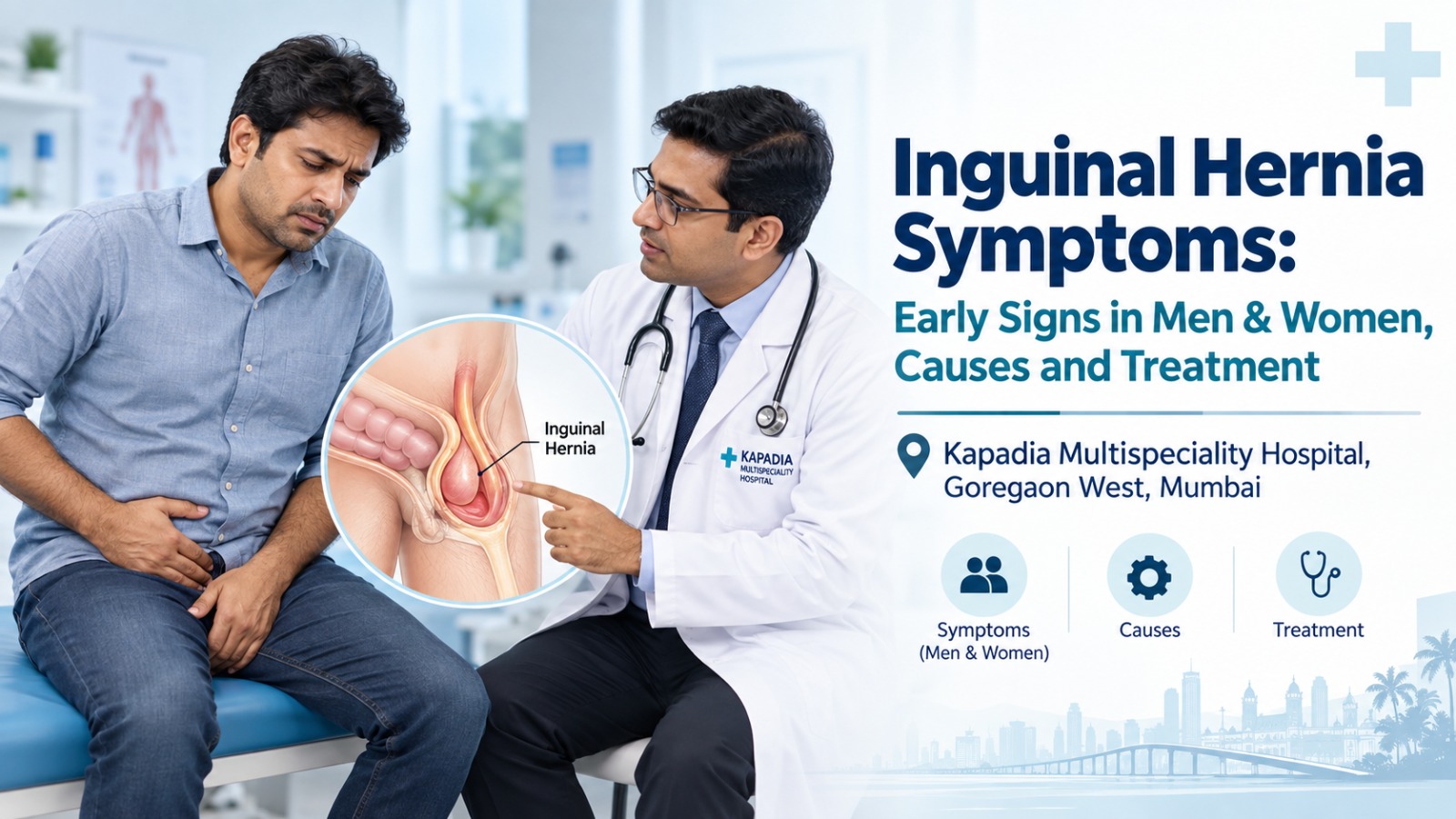
An inguinal hernia is a common type of hernia that develops in the groin area. It happens when tissue, fat or part of the intestine pushes through a weak area in the lower abdominal wall.
Some people notice only a small lump, while others experience pain, heaviness or discomfort while walking, coughing, bending or lifting something heavy.
Understanding inguinal hernia symptoms early can help you get the condition checked before it becomes more uncomfortable or complicated.
If you notice a swelling or repeated pain in the groin, you can consult the surgical team at Kapadia Multispeciality Hospital for inguinal hernia treatment in Mumbai, located in Goregaon West, Mumbai.
What Is an Inguinal Hernia?
An inguinal hernia occurs when tissue pushes through a weak area in the muscles of the lower abdomen, creating a bulge or swelling near the groin.
A lump in the groin that becomes more noticeable when you stand, cough, lift something or strain may be a sign of an inguinal hernia.
Inguinal hernias can affect both men and women, although they are more common in men.
You can learn more about the different types, diagnosis and treatment on our Hernia Treatment in Mumbai page.
What Are the Early Signs of an Inguinal Hernia?
The early signs of an inguinal hernia can sometimes be mild. Some patients may ignore them because the discomfort comes and goes.
Common symptoms include:
- A lump or swelling in the groin
- Pain or discomfort around the groin
- A feeling of heaviness or pressure
- Burning or aching near the swelling
- Pain while coughing or sneezing
- Discomfort while bending or lifting
- A lump that becomes more visible while standing
- Symptoms that reduce when lying down
Sometimes, an inguinal hernia may not cause pain at all. The swelling may be the only symptom.
If the lump is getting bigger or repeatedly causing discomfort, it should be examined by a doctor.
Inguinal Hernia Symptoms in Men
Inguinal hernia symptoms in men often include a noticeable swelling on one side of the groin.
Common symptoms may include:
- A visible groin bulge
- Pain during exercise or physical activity
- Heaviness in the lower abdomen
- Pain while lifting heavy objects
- Burning or aching around the groin
- Swelling or discomfort extending towards the scrotum in some cases
The lump may become more noticeable when standing, coughing or straining and may reduce when lying down.
Men experiencing these symptoms can consult a hernia specialist in Goregaon West, Mumbai for proper diagnosis.
Inguinal Hernia Symptoms in Women
Inguinal hernia symptoms in women may sometimes be less obvious, especially when there is no clearly visible lump.
Symptoms can include:
- Groin pain or pressure
- A small swelling near the groin
- Pain during exercise
- Discomfort while coughing
- A pulling sensation in the lower abdomen
- Pain after standing for a long time
Groin pain in women can have different causes. Therefore, proper examination by a doctor is important before deciding on treatment.
What Causes an Inguinal Hernia?
An inguinal hernia usually develops because of a weak area in the abdominal wall combined with pressure inside the abdomen.
Some people may have this weakness from birth, while in others it may develop with age.
Factors that can increase pressure on the abdominal wall include:
- Heavy lifting
- Chronic constipation and repeated straining
- Long-term coughing
- Pregnancy
- Age-related muscle weakness
- Repeated physical strain
- Family history of hernia
Having one of these risk factors does not necessarily mean you will develop a hernia.
Can an Inguinal Hernia Heal Without Surgery?
An inguinal hernia generally does not go away on its own.
If the hernia is small and is not causing significant symptoms, a doctor may sometimes recommend monitoring it.
However, if the hernia becomes painful, increases in size or starts affecting your daily activities, surgery may be recommended. Treatment should always be decided after examination by a qualified surgeon.
When Is an Inguinal Hernia an Emergency?
Most inguinal hernias are not emergencies, but complications can happen if tissue becomes trapped.
Seek urgent medical attention if you develop:
- Sudden or severe groin pain
- A hard or very painful hernia lump
- A lump that does not go back inside
- Redness or darkening around the swelling
- Nausea or vomiting
- Fever
- Severe abdominal pain or bloating
- Difficulty passing stool or gas
These symptoms may indicate a trapped or strangulated hernia and require immediate medical evaluation.
Kapadia Multispeciality Hospital in Goregaon West, Mumbai provides 24×7 emergency and surgical care for patients who may require urgent assessment.
How Is an Inguinal Hernia Diagnosed?
In many cases, a doctor can diagnose an inguinal hernia through a physical examination.
The doctor may ask you to stand, cough or gently strain so that the swelling becomes easier to see or feel.
If the diagnosis is unclear, an ultrasound or another imaging test may be recommended depending on your symptoms.
What Are the Inguinal Hernia Treatment Options?
Inguinal hernia treatment depends on the size of the hernia, symptoms, age, general health and the surgeon's assessment.
Small hernias without significant symptoms may sometimes be monitored.
If the hernia is painful, getting bigger or affecting normal activities, inguinal hernia surgery may be advised.
Two commonly used approaches are:
Open Inguinal Hernia Surgery
During open surgery, the surgeon makes an incision near the groin. The hernia is returned to its correct position and the weak area of the abdominal wall is repaired.
Mesh may be used to strengthen the area and reduce the risk of recurrence.
Laparoscopic Inguinal Hernia Surgery
Laparoscopic hernia surgery in Mumbai is performed through small incisions using a camera and specialised surgical instruments.
The hernia is repaired from inside the abdomen, and mesh may be used to strengthen the weak area.
Laparoscopic surgery may be suitable for selected patients, depending on the size and type of hernia, previous surgeries, overall health and the surgeon's assessment.
You can also learn about other minimally invasive procedures offered at Kapadia on our Laparoscopic Surgery in Mumbai page.
When Should You Consult a Hernia Specialist in Goregaon West, Mumbai?
You should consider consulting a doctor if you notice:
- A new lump in the groin
- Groin pain that keeps returning
- Pain while coughing or lifting
- A swelling that is increasing in size
- Heaviness or pressure in the lower abdomen
- Difficulty performing normal activities because of groin discomfort
Do not wait for the pain to become severe before getting evaluated.
For patients searching for a hernia specialist in Goregaon West, hernia treatment in Mumbai or laparoscopic hernia surgery in Mumbai, Kapadia Multispeciality Hospital is located on Mahatma Gandhi Road, Shri Nagar, Goregaon West, Mumbai – 400062.
The surgical team evaluates the type and severity of the hernia before recommending the most appropriate treatment.
Recognising inguinal hernia symptoms early can help you seek medical advice at the right time.
A groin lump, heaviness, burning, aching or pain while coughing, walking or lifting should not be ignored. Most inguinal hernias can be identified through a clinical examination, with imaging recommended when required.
If you are experiencing symptoms or looking for inguinal hernia treatment in Goregaon West, Mumbai, consult the specialists at Kapadia Multispeciality Hospital for proper evaluation and personalised treatment.
Frequently Asked Questions
What is the most common symptom of an inguinal hernia?
The most common symptom is a bulge or swelling in the groin. It may become more noticeable while standing, coughing, lifting or straining.
Is an inguinal hernia always painful?
No. Some people have an inguinal hernia without pain. They may only notice a small lump or feeling of heaviness in the groin.
Can an inguinal hernia cause pain while walking?
Yes. Some people experience aching, pulling or pressure in the groin while walking, exercising or standing for long periods.
Can an inguinal hernia go away without surgery?
An inguinal hernia generally does not heal by itself. Some small hernias may be monitored, while painful or growing hernias may require surgery.
Which doctor treats an inguinal hernia?
Inguinal hernias are usually treated by a general surgeon or laparoscopic surgeon experienced in hernia repair.
Where can I get inguinal hernia treatment in Goregaon?
Patients in Goregaon, Malad, Kandivali, Jogeshwari, Oshiwara and nearby areas of Mumbai can consult the surgical team at Kapadia Multispeciality Hospital, Goregaon West for hernia evaluation and treatment.
This article is for general awareness only. It does not replace a consultation, examination, diagnosis or treatment by a qualified doctor.