
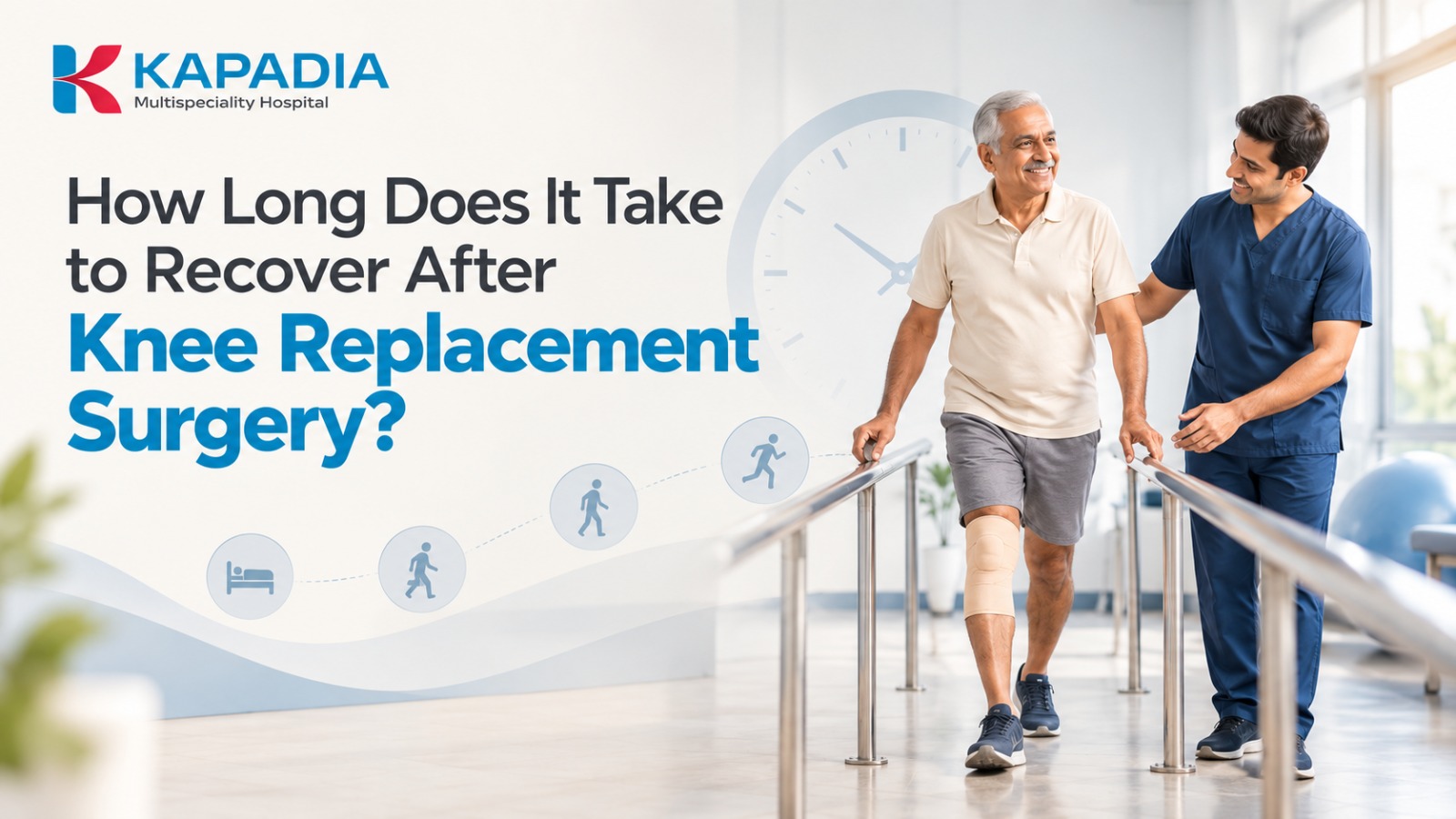
Knee replacement surgery can reduce long-term pain and improve movement. But how long does recovery take? When can you walk, climb stairs or return to work?
Knee replacement recovery time varies from person to person. Many patients begin walking with support within 24 to 48 hours, return to several daily activities within 3 to 6 weeks and make major progress over 3 to 6 months. Strength, comfort and swelling can continue to improve for 6 to 12 months or longer. Your surgeon and physiotherapist will guide your individual recovery.
What Happens During Recovery After Knee Replacement Surgery?
During knee replacement surgery, damaged joint surfaces are replaced with artificial parts. After surgery, the skin and deeper tissues need time to heal. The muscles around the knee also need to become stronger, and the joint needs regular, safe movement to reduce stiffness.
Soreness, swelling and tiredness are common at first. Progress varies, so follow your medicines, exercises and appointments.
Knee Replacement Recovery Week by Week
Here is a typical total knee replacement timeline. Partial replacements may heal faster.
First 24 to 48 Hours: Standing and Walking With Support
Once you are medically stable, your care team may help you stand and take a few steps with a walker or crutches. A physiotherapist may teach you simple movements, such as ankle pumps and gently bending or straightening the knee.
Early movement supports circulation. Walk without support only when your care team approves.
Many patients go home after they can move safely and their medical team is satisfied with their progress. Some go home within a few days, while others need a longer hospital stay.
Week 1 to 2: Managing Pain, Swelling and Wound Healing
Focus on wound care, pain control and short walks. Warmth, swelling and stiffness are common.
Take pain medicines as prescribed. Rest with your leg raised when advised, use ice as directed and keep the wound clean and dry according to your discharge instructions. Continue the exercises given by your physiotherapist instead of forcing the knee to bend.
Swelling may increase after standing or walking for too long. Balance gentle movement with rest and follow your doctor's advice.
Week 3 to 6: Returning to Everyday Activities
Walking indoors and getting up from a chair may become easier. Some patients need walking aids longer than others.
Strengthening and balance exercises may increase. Avoid heavy lifting and sudden twisting.
Week 6 to 12: Improving Strength and Confidence
Longer walks and stairs may become easier. Desk work may be possible, but physically demanding jobs often need more recovery time.
Driving should begin only when your surgeon confirms it is safe, your leg movement and reaction time are adequate, and you are no longer taking medicines that affect alertness.
Month 3 to 6 and Beyond: Building Long-Term Mobility
By three to six months, movement often improves considerably, although strength and swelling may take longer to settle.
Continue approved low-impact activities and follow-ups; recovery speeds vary.
When Can You Walk Normally After Knee Replacement?
Walking after knee replacement usually starts with support in the hospital. Over the following weeks, you may progress from a walker to a stick and then, when safe, to walking without an aid.
Your balance, strength, pain and knee movement determine when you can safely walk without an aid.
Why Is Knee Replacement Physiotherapy Important?
Knee replacement physiotherapy restores movement, strengthens muscles and helps you practise daily tasks.
A personalised rehabilitation plan may include gentle knee bends, leg-straightening movements, strengthening exercises and gradually longer walks. Do only the exercises recommended for your stage of healing.
Skipping exercises may cause stiffness, while pushing through severe pain can increase swelling. Aim for steady progress.
What Can Affect Your Knee Replacement Recovery Time?
Not everyone follows the same recovery timeline. Important factors include:
- Age and general health: Conditions such as diabetes or heart disease may affect healing.
- Strength before surgery: Stronger leg muscles can make early movement easier.
- Type of surgery: Total and partial knee replacements can have different recovery periods.
- Pain and swelling: Excess discomfort may temporarily limit exercise and walking.
- Rehabilitation: Regular physiotherapy and follow-up care support progress.
Contact your doctor if progress stops or pain worsens.
How Can You Recover Safely at Home?
Before surgery, remove loose rugs and arrange help with heavy tasks.
Eat well, stay hydrated, follow wound-care instructions and take approved short walks. Ask before driving, kneeling or restarting sports.
Seek urgent medical advice if you develop fever, increasing redness or discharge from the wound, or new significant calf pain and swelling. Sudden chest pain or difficulty breathing requires emergency care.
Knee Replacement Recovery Care in Mumbai
If considering knee replacement surgery in Mumbai, discuss surgery and recovery together.
Kapadia Multispeciality Hospital in Goregaon West provides orthopaedic assessment, surgery and post-operative guidance. The hospital also offers robotic knee replacement surgery for suitable patients. Robotic assistance can help the surgeon plan and position the implant precisely, but recovery still requires exercises, follow-ups and patience.
You can speak with the hospital's orthopaedic team in Mumbai about which treatment and rehabilitation plan may be right for your condition.
Knee replacement recovery time depends on your health, the procedure and how consistently you follow rehabilitation advice. Early supported walking is often possible within a day or two, but regaining comfortable movement takes weeks to months.
With rehabilitation and follow-up, you can rebuild strength and independence. Ask your surgeon which milestones fit your health and needs.
Frequently Asked Questions
How long does it take to recover fully from knee replacement surgery?
Many people resume basic daily activities within 3 to 6 weeks and make substantial progress within 3 to 6 months. Some improvements in strength, comfort and swelling continue for 6 to 12 months or longer.
How soon can I climb stairs after knee replacement?
Your physiotherapist may teach you how to use stairs with support before leaving the hospital. Climbing stairs more comfortably and independently takes longer and depends on your strength and balance.
Is knee pain normal three months after surgery?
Some stiffness, mild discomfort or swelling can remain at three months. Pain should generally be improving. If it is severe, new or getting worse, contact your surgeon.
How much should I walk each day after knee replacement?
There is no single walking target for everyone. Start with short walks as advised and increase gradually, based on pain, swelling, stability and your physiotherapist's plan.
Can I recover without physiotherapy?
Guided exercises are a key part of recovery. Your surgeon may recommend supervised sessions, a home exercise programme or both, depending on your needs.
This article is for general awareness only. It does not replace a consultation, examination, diagnosis or treatment by a qualified doctor.