
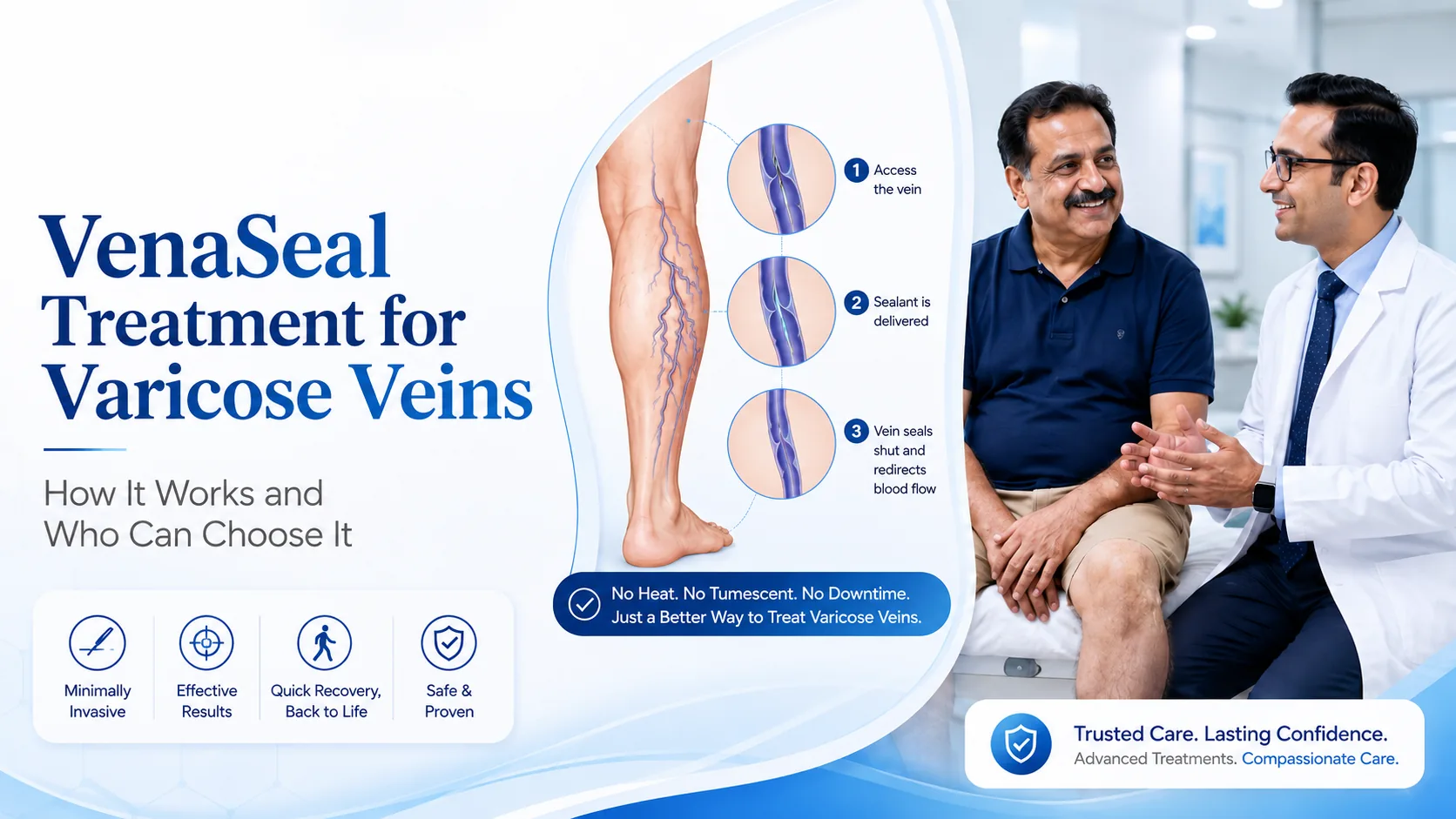
Varicose veins are enlarged, twisted veins that commonly appear on the legs. They develop when the valves inside a vein do not work properly. Blood can then flow backwards and collect in the vein, causing it to become swollen and visible. Some people only notice a cosmetic change, while others experience aching, heaviness, swelling, itching, night cramps or skin changes.
Modern varicose vein care includes treatments that close the unhealthy vein without removing it through a large operation. One such option is VenaSeal treatment for varicose veins. The procedure uses a specially designed medical adhesive to close the affected superficial vein. Blood is then naturally redirected through nearby healthy veins.
Patients looking for VenaSeal treatment in Mumbai should first undergo a clinical examination and a duplex ultrasound scan. This helps the doctor confirm whether faulty vein valves are causing the symptoms and whether VenaSeal is an appropriate choice.
What Is VenaSeal Treatment?
VenaSeal is a catheter-based treatment for symptomatic venous reflux in superficial leg veins. During the procedure, the doctor places a thin catheter inside the unhealthy vein under ultrasound guidance. A small amount of medical adhesive is delivered at planned points along the vein. Gentle pressure is applied from outside the leg, helping the vein walls join together and close.
Once the unhealthy vein is sealed, blood no longer collects in it. The body sends blood through other healthy veins. Over time, the treated vein becomes firm and is gradually absorbed as part of the natural healing process.
Unlike endovenous laser or radiofrequency treatment, VenaSeal does not use heat to close the vein. It also usually does not require several injections of numbing fluid along the complete length of the treated vein.
How Does the VenaSeal Procedure Work?
1. Assessment and duplex ultrasound
The doctor checks the visible veins, symptoms, circulation and medical history. Ultrasound is used to identify the affected vein and map the direction of blood flow.
2. Local numbing at the entry point
A small area of skin is cleaned and numbed. The vein is entered through a tiny puncture, usually in the lower leg.
3. Catheter placement
A thin catheter is guided into the target vein while the doctor watches its position on ultrasound.
4. Medical adhesive delivery
Small amounts of adhesive are placed inside the vein. The doctor applies pressure over each treated section so the vein closes properly.
5. Ultrasound confirmation
At the end of the procedure, ultrasound is used to confirm closure of the treated vein and check blood flow in the deeper veins.
6. Discharge and walking
Most patients can walk soon after treatment and return home on the same day, depending on their health and the doctor's advice.
What Are the Possible Benefits?
Possible benefits of the VenaSeal procedure include:
- Minimally invasive varicose vein treatment performed through a small puncture
- No heat is used inside the vein, reducing the risk of heat-related injury to nearby tissue
- Only a small amount of local numbing medicine may be needed at the catheter entry point
- Many patients can walk shortly after the procedure
- Recovery is usually quick, and many people return to light routine activities soon
- Compression stockings may not be needed after treatment in some cases, although the treating doctor will decide this
- The procedure can reduce symptoms related to venous reflux, such as heaviness, aching and swelling
Who Can Choose VenaSeal Treatment?
VenaSeal may be considered for adults who have symptoms caused by venous reflux in a superficial truncal vein, such as the great saphenous vein. The condition should be confirmed by duplex ultrasound.
It may suit patients who want a non-thermal treatment, prefer a procedure with fewer numbing injections, have difficulty wearing compression stockings, or want to return to routine activities quickly. However, visible veins alone do not confirm suitability. The underlying source of the problem must first be identified.
Signs and symptoms that may lead to an assessment include:
- Aching, heaviness or tiredness in the legs that becomes worse after standing
- Swelling around the ankle or lower leg
- Visible, twisted varicose veins linked to venous reflux
- Skin itching, darkening or irritation near the affected veins
- Symptoms that continue despite exercise, leg elevation or compression advice
- A venous ulcer or skin damage related to long-term venous disease, after specialist assessment
Who May Not Be Suitable for VenaSeal?
VenaSeal is not suitable for every patient. The product information lists important situations in which it should not be used, including a known allergy to the VenaSeal adhesive or cyanoacrylate materials, acute superficial thrombophlebitis, thrombophlebitis migrans and acute sepsis.
The safety and effectiveness in pregnancy and in children have not been established in the product information. Patients should tell the doctor about allergies, previous blood clots, active infection, pregnancy, medicines and other health conditions before treatment. A different procedure may be safer when the affected vein anatomy is unsuitable or when another medical problem is causing leg swelling.
Is VenaSeal Treatment Painful?
Most patients feel the small injection used to numb the catheter entry point. During adhesive delivery, they may notice pressure or a pulling sensation, but the procedure is generally well tolerated. Because heat is not used, there is usually no need for repeated numbing injections along the full vein.
Mild tenderness, bruising, inflammation or a tight feeling can occur after treatment. Pain differs from person to person. The doctor may advise simple pain relief and walking. Increasing pain, marked swelling, breathing difficulty, fever or an allergic reaction requires urgent medical attention.
How Long Does Treatment and Recovery Take?
The exact time depends on the number and length of veins being treated. Many VenaSeal procedures are completed within about 30 to 60 minutes, but consultation, preparation and observation increase the total hospital time.
Patients are usually encouraged to walk after the procedure. Many can resume light daily activities within a short period. Heavy exercise, long travel or strenuous work may need to be avoided temporarily. The doctor will provide instructions based on the ultrasound findings and the patient's health.
Is VenaSeal Safe?
VenaSeal is an established medical device treatment for suitable adults with symptomatic venous reflux. However, no medical procedure is free from risk. Possible problems include pain, inflammation of the treated vein, bruising, bleeding at the puncture site, infection, skin colour change, numbness, deep vein thrombosis, pulmonary embolism and an allergic or foreign-body reaction to the adhesive.
Serious complications are uncommon, but patients should understand the risks before giving consent. The procedure should be performed by a trained doctor using ultrasound guidance. Follow-up ultrasound or clinical review may be advised to check the treated vein and recovery.
What Happens to the Visible Varicose Veins?
VenaSeal closes the main unhealthy vein that is causing backward blood flow. Smaller surface veins may become less visible after the pressure reduces. However, some bulging veins may remain and need a separate treatment, such as sclerotherapy or a small phlebectomy. The doctor should explain whether one treatment or a combination is likely to be needed.
Why Choose Kapadia Multispeciality Hospital for VenaSeal Treatment in Mumbai?
Kapadia Multispeciality Hospital in Goregaon West provides evaluation and minimally invasive treatment for varicose veins, including the VenaSeal procedure. Patients can be assessed for venous reflux and guided towards a treatment based on their symptoms, ultrasound findings and medical history.
The hospital's wound and vein services are particularly useful for patients who have both varicose veins and skin changes, swelling or non-healing leg wounds. Treatment planning may include procedure selection, wound care, circulation assessment and follow-up under one care team.
Key highlights include:
- Specialist evaluation for varicose veins and chronic venous disease
- Duplex ultrasound-based treatment planning
- VenaSeal, laser and other minimally invasive vein-treatment options
- Support for patients with leg swelling, skin changes or venous wounds
- Convenient access in Goregaon West for patients seeking varicose veins treatment in Mumbai
- Post-procedure guidance and follow-up care
Conclusion
VenaSeal treatment for varicose veins closes an unhealthy superficial vein with a specially formulated medical adhesive. It does not use heat and is usually performed through a small catheter entry point. Many patients can walk soon after treatment and return to daily activities quickly.
The treatment is not right for everyone. A clinical examination and duplex ultrasound are necessary to identify the faulty vein and check for conditions that may make the procedure unsuitable. Patients considering VenaSeal treatment in Mumbai can consult the vein-care team at Kapadia Multispeciality Hospital for an individual assessment and treatment plan.
Frequently Asked Questions
Does VenaSeal permanently close the treated vein?
The medical adhesive is used to create permanent closure of the diseased superficial vein. Blood is redirected through healthy veins. New varicose veins can still develop in other veins in the future, so follow-up and healthy habits remain important.
Will I need compression stockings after VenaSeal?
Compression stockings may not be required after VenaSeal in many cases. However, the doctor may still recommend them when there is swelling, another vein treatment, a wound or a specific medical reason.
Can I walk after the procedure?
Most patients are encouraged to walk soon after treatment. Walking supports circulation. The doctor will explain when you can restart exercise, long travel and strenuous work.
Can VenaSeal treat all visible veins?
VenaSeal mainly treats the unhealthy truncal vein causing venous reflux. Smaller bulging or spider veins may require another procedure, such as sclerotherapy or phlebectomy.
How is VenaSeal different from laser treatment?
VenaSeal uses medical adhesive and does not use heat. Endovenous laser treatment uses heat energy to close the vein and usually requires numbing fluid along the treated vein. Both can be effective when selected for the right patient.
How do I know whether VenaSeal is right for me?
Suitability is decided after a vein specialist examines your legs and performs duplex ultrasound. Your symptoms, allergies, vein anatomy, clot history, infections and general health are considered before treatment.
This article is for general awareness only. It does not replace a consultation, examination, diagnosis or treatment by a qualified doctor.