
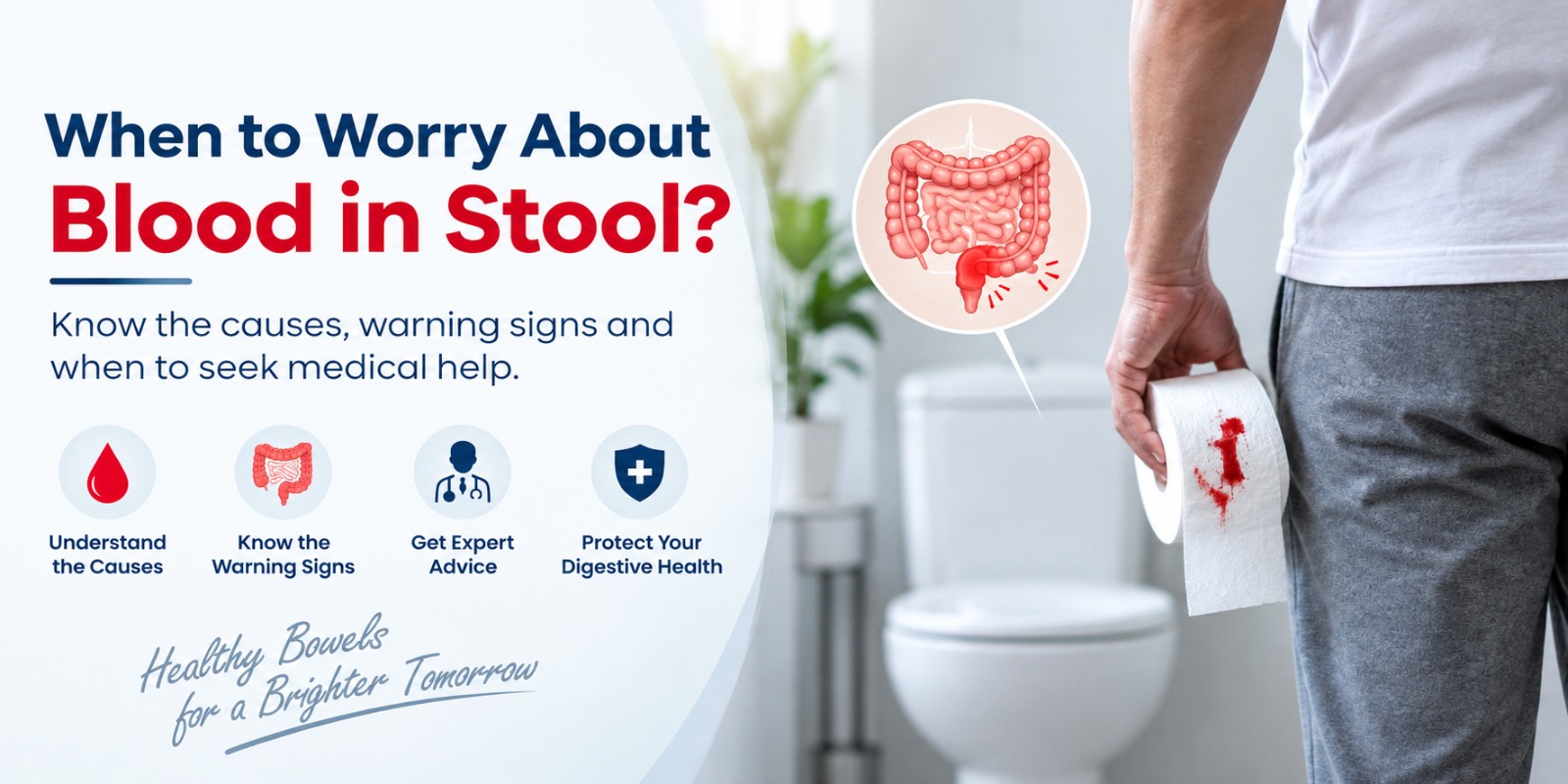
Seeing blood in the stool can be worrying, but it does not always mean there is a serious problem. In many cases, it may be caused by common conditions such as piles or an anal fissure. However, repeated or unexplained bleeding should not be ignored, as it may sometimes be linked to other digestive conditions that need medical attention.
The colour, amount, and frequency of bleeding can help indicate where the bleeding may be coming from. Bright red blood is often associated with the lower digestive tract, including the rectum or anus, while dark red, maroon, or black stools may suggest bleeding from higher in the digestive system. Patients who notice recurring bright red bleeding due to piles may also need to explore suitable piles treatment in Mumbai after proper medical evaluation.
Understanding when to worry about blood in stool can help a patient recognise warning signs early and know when a doctor's consultation should not be delayed.
What Does Blood in Stool Look Like?
Blood in stool does not always look the same. A patient may notice:
- Bright red blood on toilet paper
- Red streaks on the outside of the stool
- Drops of blood in the toilet bowl
- Blood mixed with the stool
- Dark red or maroon stool
- Black or tar-like stool
The appearance of the blood can sometimes help a doctor understand where the bleeding may be coming from.
Bright red blood usually suggests that the bleeding is closer to the anus or rectum. Black or tarry stool may be associated with bleeding higher in the gastrointestinal tract.
When to Worry About Blood in Stool Bright Red in Colour?
One of the most common concerns is when to worry about blood in stool bright red in colour.
A small amount of bright red blood after passing a hard stool may occur because of piles or a small anal fissure. However, bright red blood should not automatically be assumed to be harmless.
Medical advice is especially important when the bleeding:
- Keeps coming back
- Happens without constipation or straining
- Becomes heavier
- Is mixed throughout the stool
- Comes with abdominal pain
- Occurs with diarrhoea
- Is associated with changes in bowel habits
- Occurs along with unexplained weight loss or unusual tiredness
Bright red rectal bleeding can occur with haemorrhoids and anal fissures, but other bowel conditions can also cause it.
Common Causes of Blood in Stool
Several conditions can cause rectal bleeding. Some are relatively minor, while others require further investigation.
1. Piles or Haemorrhoids
Piles are swollen veins in and around the lower rectum or anus. They are one of the common causes of bright red blood during a bowel movement.
A patient may notice blood on toilet paper or on the surface of the stool. Other symptoms may include itching, swelling, discomfort or a lump around the anus.
Patients experiencing these symptoms can learn more about Piles Treatment in Mumbai at Kapadia Multispeciality Hospital.
Importantly, rectal bleeding should not automatically be blamed on piles without a proper evaluation, especially when it is new, frequent or associated with changes in bowel habits.
2. Anal Fissure
An anal fissure is a small tear in the skin around the anal opening. It commonly happens after passing hard or large stools.
Unlike many internal piles, fissures often cause sharp or burning pain during or after passing stool. A small amount of bright red blood may also appear on the toilet paper or outside the stool.
Patients with pain and bleeding during bowel movements can read more about Fissure Treatment in Mumbai.
3. Constipation
Constipation can lead to hard stools and excessive straining. This may irritate piles or cause an anal fissure, resulting in fresh blood during bowel movements.
Improving hydration, fibre intake and bowel habits may help reduce constipation, but recurring bleeding still requires medical assessment.
4. Inflammatory Bowel Disease
Conditions such as ulcerative colitis and Crohn's disease can cause inflammation inside the digestive tract.
A patient may experience blood in the stool along with diarrhoea, abdominal pain, mucus, tiredness or changes in bowel habits. These symptoms should be discussed with a gastroenterologist.
5. Colon Polyps or Colorectal Cancer
Blood in the stool can sometimes be linked to colon polyps or colorectal cancer.
This does not mean that every episode of rectal bleeding is cancer. However, unexplained or recurring bleeding should not be ignored, particularly when accompanied by persistent bowel changes, weight loss or weakness.
A doctor may recommend further investigation depending on the patient's symptoms, age, medical history and family history.
When Does Blood in Stool Need Urgent Medical Attention?
Knowing when to worry about blood in stool is especially important when the bleeding is heavy or accompanied by other symptoms.
Urgent medical attention should be considered when there is:
- A large amount of blood
- Continuous or repeated heavy bleeding
- Large blood clots
- Black or tarry stool
- Severe abdominal pain or cramping
- Dizziness or light-headedness
- Fainting
- Unusual weakness
- Rapid heartbeat
- Pale or cold skin
Heavy gastrointestinal bleeding can sometimes cause significant blood loss and may become a medical emergency.
Can Blood in Stool Happen Without Pain?
Yes. Rectal bleeding does not always cause pain.
Internal haemorrhoids, for example, may cause painless bright red bleeding. Some bowel polyps and other gastrointestinal conditions may also cause bleeding without significant discomfort.
For this reason, the absence of pain should not automatically be taken as a sign that the bleeding is harmless.
If bleeding keeps returning, a patient should speak to a doctor even if there is no pain.
How Is the Cause of Blood in Stool Diagnosed?
Diagnosis usually begins with a discussion about the patient's symptoms and medical history.
A doctor may ask about:
- The colour of the blood
- How often bleeding occurs
- Whether the blood is on or mixed inside the stool
- Constipation or diarrhoea
- Abdominal pain
- Recent changes in bowel habits
- Current medicines
- Family history of bowel conditions
Depending on the symptoms, a physical or rectal examination may be performed. Further tests may also be advised.
In some patients, a Colonoscopy in Mumbai may be recommended to examine the colon and rectum. Colonoscopy can help doctors investigate symptoms such as rectal bleeding, persistent bowel changes, inflammation, polyps and other abnormalities.
Should a Small Amount of Blood Be Ignored?
A small, one-time episode of bleeding may sometimes happen because of constipation, piles or a fissure.
However, bleeding that returns should not simply be ignored or repeatedly treated at home without knowing its cause.
Medical evaluation becomes more important when there is no clear reason for the bleeding or when other digestive symptoms are present.
Conclusion
Blood in the stool can have many causes, ranging from common conditions such as piles and fissures to digestive conditions that need further investigation.
The main point when deciding when to worry about blood in stool is to look at the amount, colour, frequency and other symptoms occurring with the bleeding.
Bright red blood may commonly come from the lower rectum or anus, but recurring or unexplained bleeding deserves medical attention. Dark or black stools, heavy bleeding, dizziness, fainting or severe abdominal pain should be assessed urgently.
Instead of assuming that blood in stool is simply due to piles, a proper medical evaluation can help identify the cause and determine whether any further tests or treatment are required.
Frequently Asked Questions
Does blood in stool always mean cancer?
No. Most cases are caused by common conditions such as piles, anal fissures or constipation. However, bleeding that keeps returning or comes with weight loss or changes in bowel habits should be evaluated by a doctor.
Can food or medicine make stool look red or black?
Yes. Beetroot and some red foods can make stool look reddish, while iron tablets and certain medicines can make it look dark. If there is any doubt about whether it is blood, a doctor should be consulted.
Can blood in stool stop on its own?
Bleeding from a small fissure or a piles flare-up may settle once bowel movements improve. Bleeding that returns, becomes heavier or has no clear reason still needs medical assessment.
Is a colonoscopy always needed for blood in stool?
No. The doctor decides after considering the symptoms, age, medical history and examination findings. A colonoscopy may be advised when bleeding is unexplained, recurring or associated with other bowel symptoms.
How soon should a doctor be consulted about blood in stool?
A single small episode after a hard stool can be watched briefly. Heavy bleeding, black or tarry stools, severe abdominal pain, dizziness or fainting need urgent medical attention.
This article is for general awareness only. It does not replace a consultation, examination, diagnosis or treatment by a qualified doctor.