
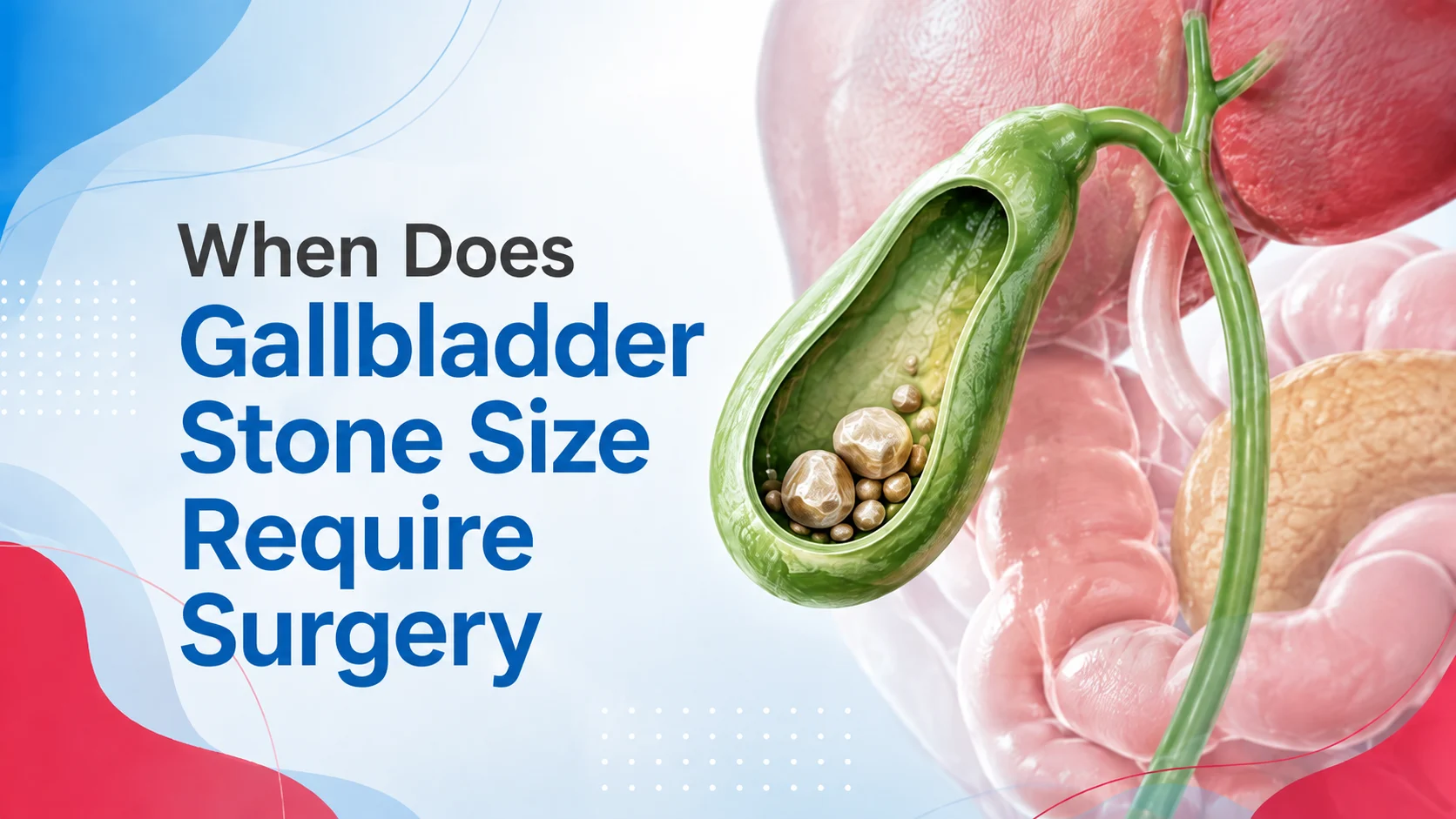
Gallstones are common and may be found during an ultrasound even when a person has no symptoms. One of the most common questions after a scan is, "Is my gallbladder stone size large enough to need surgery?" The answer is not based on size alone. In many patients, symptoms, repeated attacks, inflammation, stones in the bile duct and other complications are more important than a single measurement.
There is no universal gallbladder stone size for surgery that applies to everyone. A small stone can sometimes move and block the bile duct, while a much larger stone may remain inside the gallbladder without causing symptoms. The complete ultrasound report and the patient's symptoms therefore need to be considered together.
What Is a Gallbladder Stone?
Gallstones are hard deposits that form inside the gallbladder, a small organ below the liver that stores bile. They can be made mainly from cholesterol or pigments. Some people have a single stone, while others have several stones. The stones may be tiny or several centimetres in size.
Many people have gallstones without knowing it. These are often called silent or asymptomatic gallstones. If they are not causing pain, inflammation or other problems, treatment may not be required immediately. Regular medical advice is still useful if the scan shows other gallbladder changes.
Gallbladder Stone Size Chart
| Gallbladder Stone Size | What It May Mean |
|---|---|
| Less than 5 mm | Small stones can still cause problems if they move into the bile duct. |
| 5–10 mm | Size alone generally does not decide whether surgery is needed. |
| 10–20 mm | Symptoms and the condition of the gallbladder remain important. |
| 20–30 mm | Larger stones need medical review, especially when symptoms occur. |
| More than 30 mm or 3 cm | A larger stone that may require closer specialist discussion, particularly with other risk factors. |
This chart should not be used as a rule for deciding surgery at home. A patient with repeated attacks from a 7 mm stone may be advised surgery, while another patient with a larger silent stone may be managed differently. The doctor looks at the whole clinical picture.
Is There a Fixed Gallbladder Stone Size for Surgery?
No. There is no fixed rule that every gallstone above 10 mm, 15 mm or 20 mm needs surgery. Surgery is commonly recommended when gallstones are causing symptoms or complications. This is why the phrase gallbladder stone size for surgery can be misleading if size is considered without symptoms.
Patients who have been diagnosed with gallstones can read more about gallbladder stone treatment at Kapadia Hospital. A surgical consultation can help explain whether symptoms and scan findings make an operation appropriate.
When Is Gallbladder Surgery Usually Recommended?
Repeated Gallbladder Pain
Gallstone pain, also called biliary colic, usually occurs in the upper right or upper middle part of the abdomen. It may begin after food, especially a heavy meal, and can last from minutes to several hours. If the attacks keep returning, the doctor may recommend removing the gallbladder even when the stones are not especially large.
Acute Cholecystitis
When a stone blocks the outlet of the gallbladder, the gallbladder can become inflamed. This condition is called acute cholecystitis. It may cause constant upper abdominal pain, fever, nausea and tenderness. Hospital treatment and early surgery may be recommended depending on the patient's condition.
Stones in the Common Bile Duct
A gallstone can leave the gallbladder and enter the common bile duct. This can block the normal flow of bile and cause jaundice, infection or pancreatitis. Small stones may sometimes be more likely to move out of the gallbladder, so a small gallbladder stone size does not always mean a low risk of complications.
Gallstone Pancreatitis
A gallstone can block the area where bile and pancreatic fluid drain into the intestine. This may cause inflammation of the pancreas, known as pancreatitis. It can cause severe upper abdominal pain and vomiting and needs medical treatment.
Can Small Gallstones Be Dangerous?
Yes. Small gallstones are not always harmless because they may move into the bile duct. The problem is not simply the diameter of the stone but where it travels. A patient with several small stones and repeated attacks may have a stronger reason for surgery than someone with one larger stone that has never caused symptoms.
What About Gallstones Larger Than 3 cm?
Gallstones larger than 3 cm are considered very large. In selected patients, doctors may discuss surgery even if symptoms are limited because very large stones have been associated with a higher risk of long-term gallbladder problems. However, this does not mean that every person with a stone above 3 cm has cancer or automatically needs an operation.
A surgeon may also consider age, gallbladder wall thickness, polyps, calcification, other scan changes and the patient's overall fitness for surgery.
What Tests Help Decide Whether Surgery Is Needed?
Ultrasound is usually the first test used to diagnose gallstones. It can show the gallbladder stone size, number of stones, gallbladder wall changes and signs of inflammation. Blood tests may be used to check for infection and changes in liver or pancreatic enzymes.
If a doctor suspects that a stone has entered the common bile duct, additional imaging such as MRCP may be advised. In some cases, a procedure called ERCP is used to remove a stone from the bile duct before or around the time of gallbladder surgery.
What Surgery Is Done for Gallstones?
The standard operation for symptomatic gallstones is usually laparoscopic cholecystectomy. This is keyhole surgery in which the gallbladder is removed along with the stones inside it. Doctors usually do not remove only the stones and leave the gallbladder behind, because new stones may form again.
Patients who want to understand the surgical approach can also read about laparoscopic surgery at Kapadia Hospital.
Can Gallstones Be Treated Without Surgery?
Silent gallstones often do not need immediate treatment. When gallstones repeatedly cause pain or complications, surgery is generally the definitive treatment for patients who are fit for an operation. Medicines that dissolve certain cholesterol stones may be used only in selected situations and may take a long time to work. Stones can also return later.
For more patient education, Kapadia Hospital also has information on gallbladder stone symptoms and common concerns.
When Should Gallstone Symptoms Be Treated Urgently?
Seek prompt medical care if upper abdominal pain is severe or persistent, especially when there is fever, chills, repeated vomiting or yellowing of the eyes or skin. These symptoms may suggest inflammation, infection or a blocked bile duct and should not be ignored.
Can Diet Reduce the Need for Surgery?
A balanced diet may reduce symptoms for some people, but it cannot reliably remove existing gallstones. If attacks keep recurring, changing food habits alone may not prevent future complications. A surgeon can explain whether observation or surgery is more appropriate.
How Does a Doctor Decide What Is Best?
The final decision is based on symptoms, ultrasound findings, the number and gallbladder stone size, any history of jaundice or pancreatitis, blood test results and the patient's general health. This is why two people with the same size stone may receive different recommendations.
Frequently Asked Questions
Does a 10 mm gallbladder stone need surgery?
Not automatically. Symptoms, repeated pain, inflammation and complications are usually more important than the 10 mm measurement alone.
Is a 20 mm gallstone considered large?
It is a larger gallstone, but size alone still does not determine whether surgery is required.
What gallbladder stone size is considered very large?
A stone above 3 cm is generally considered very large and may lead to closer specialist discussion, particularly when other risk factors are present.
This article is for general awareness only. It does not replace a consultation, examination, diagnosis or treatment by a qualified doctor.