
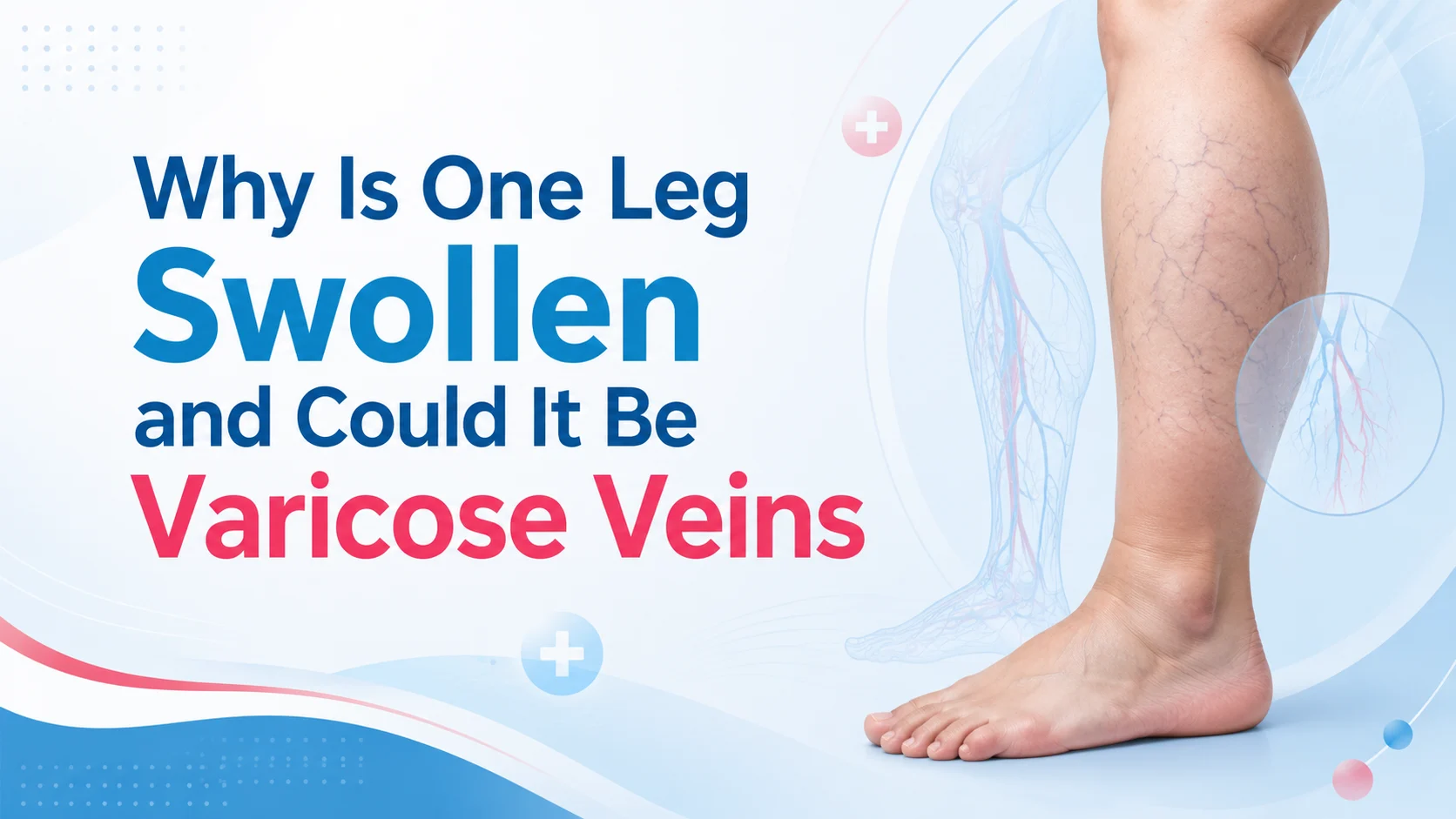
Swelling in one leg can happen for many reasons. Sometimes it is related to standing for long hours or a minor injury. However, one leg swollen more than the other can also be linked with vein problems, infection, a blood clot or other medical conditions. Varicose veins are one possible cause, especially when the swelling gets worse by the end of the day and comes with heaviness, aching or visible twisted veins.
Sudden one-sided swelling should not automatically be assumed to be varicose veins. A deep vein thrombosis, or DVT, can also cause one leg to swell and needs urgent medical assessment. The timing and accompanying symptoms are important.
What Does Swelling in One Leg Mean?
Leg swelling occurs when fluid builds up in the tissues. If only one leg is affected, the cause may be local to that leg. Possible reasons include varicose veins, chronic venous insufficiency, deep vein thrombosis, injury, infection, lymphatic swelling or inflammation in a joint or surrounding tissue.
How quickly the swelling started can provide an important clue. Gradual swelling that becomes worse after standing may suggest a vein circulation problem, while sudden painful swelling requires faster assessment to rule out a blood clot or infection.
Could Varicose Veins Cause One Leg to Swell?
Yes. Varicose veins can cause swelling in one leg or both legs. They develop when valves inside the leg veins do not work properly. These valves normally help blood travel upwards towards the heart. When they become weak, some blood can flow backwards and collect in the leg. This increases pressure inside the veins and may lead to enlarged veins, aching and swelling.
Patients with these symptoms can learn more about varicose veins treatment at Kapadia Hospital.
Signs That Swelling May Be Related to Varicose Veins
Swelling from vein problems often develops gradually and may be most noticeable around the ankle or lower leg. Other symptoms can help suggest that varicose veins or venous insufficiency are involved.
- Visible blue, purple or bulging veins
- Aching or heaviness in the affected leg
- Swelling that becomes worse after long periods of standing
- Relief after raising the leg
- Itching or dry skin around the lower leg
- Brown or darker skin around the ankle
- Leg cramps or a tired feeling in the calf
Some people can have deeper vein reflux without large visible veins on the skin. For this reason, the absence of obvious varicose veins does not completely rule out a vein circulation problem.
Why Can Varicose Veins Affect One Leg More Than the Other?
Vein valve damage does not always affect both legs equally. One leg may have weaker valves, previous vein damage or more severe backward blood flow than the other. A history of a previous blood clot or injury can also affect one leg more than the other.
Pregnancy, long periods of standing, excess body weight, age and family history may increase the chance of varicose veins. Even when both legs are affected, symptoms can be much more noticeable on one side.
When Could One-Sided Swelling Be a Blood Clot?
Deep vein thrombosis is a blood clot inside a deep vein, usually in the leg. It may cause sudden swelling in one leg, pain or tenderness in the calf or thigh, warmth and changes in skin colour. Not every person has all of these symptoms.
DVT is important because part of the clot can travel to the lungs and cause a pulmonary embolism. Urgent medical assessment is needed if one leg suddenly becomes swollen without a clear reason, particularly if it is painful, warm or red. Chest pain, sudden breathlessness, coughing blood or fainting together with leg swelling needs emergency medical care.
Other Common Causes of One Swollen Leg
Injury
A sprain, muscle injury or fracture can cause local swelling. There may also be bruising, tenderness and pain when walking or putting weight on the leg.
Infection
A skin or soft-tissue infection can cause swelling, warmth, redness and pain. Fever may also occur. Infection needs medical treatment and should not be confused with ordinary varicose vein swelling.
Lymphatic Swelling
Lymphoedema happens when lymph fluid does not drain normally. The leg may feel heavy or tight and the swelling can become persistent. The skin may also become thickened over time.
Joint or Soft-Tissue Problems
Inflammation around the knee, ankle or surrounding tissues can sometimes cause one-sided swelling. The swelling may be focused around a joint rather than the whole lower leg.
How Are Varicose Veins Diagnosed?
A doctor will examine the legs and ask when the swelling happens, whether it improves after raising the leg and whether pain, visible veins or skin changes are present. A Doppler or duplex ultrasound is commonly used to check blood flow through the veins.
The scan can show whether vein valves are leaking and can also help identify a possible blood clot when DVT is suspected.
What Can Help Mild Varicose Vein Swelling?
If a doctor confirms varicose veins and there are no urgent concerns, regular walking, avoiding very long periods of sitting or standing, and raising the legs while resting may help reduce symptoms.
Compression stockings may be recommended for some patients, but the correct type and pressure should be selected after medical assessment. They are not suitable for every circulation problem, so they should not be started simply because one leg is swollen.
When Is Varicose Vein Treatment Needed?
Treatment may be considered when varicose veins cause ongoing pain, heaviness, repeated swelling, skin changes, bleeding or ulcers. Modern treatments are often minimally invasive. The best option depends on which veins are affected and what the Doppler ultrasound shows.
Kapadia Hospital provides information on laser treatment for varicose veins for patients who may be suitable for endovenous treatment.
Another minimally invasive option in selected patients is VenaSeal treatment for varicose veins, which closes the abnormal vein using a medical adhesive system.
Can Varicose Veins Cause Skin Changes?
Yes. Long-term pressure inside the veins can affect the skin around the ankle and lower leg. Itching, dryness, brown pigmentation and hardening may develop. In more advanced venous disease, a wound or venous ulcer can form and may be slow to heal.
Can Exercise Help?
Walking and regular movement can support circulation and may reduce heaviness. Exercise cannot repair damaged vein valves. People with significant swelling or pain should first find out the cause.
When Should You See a Doctor?
Arrange a medical assessment if one leg remains swollen, swelling repeatedly returns, visible varicose veins are causing pain or heaviness, or the skin around the ankle begins to change. Sudden one-sided swelling, marked calf pain, warmth or redness should be assessed urgently to rule out DVT or another serious cause.
Why a Doppler Scan Can Be Useful
A Doppler scan can show which veins have abnormal reflux, whether deep veins are open and whether a blood clot is present. This helps the doctor decide whether treatment is needed.
Frequently Asked Questions
Can varicose veins make only one ankle swell?
Yes. Venous reflux may be worse in one leg, so swelling may be more noticeable on one side.
Can you have vein-related swelling without visible varicose veins?
Yes. Deeper veins may have valve problems even when large surface veins are not obvious. A Doppler ultrasound can help assess this.
Is one swollen leg always a blood clot?
No. There are several possible causes. However, DVT is important to rule out when swelling starts suddenly or occurs with pain, warmth or redness.
This article is for general awareness only. It does not replace a consultation, examination, diagnosis or treatment by a qualified doctor.