
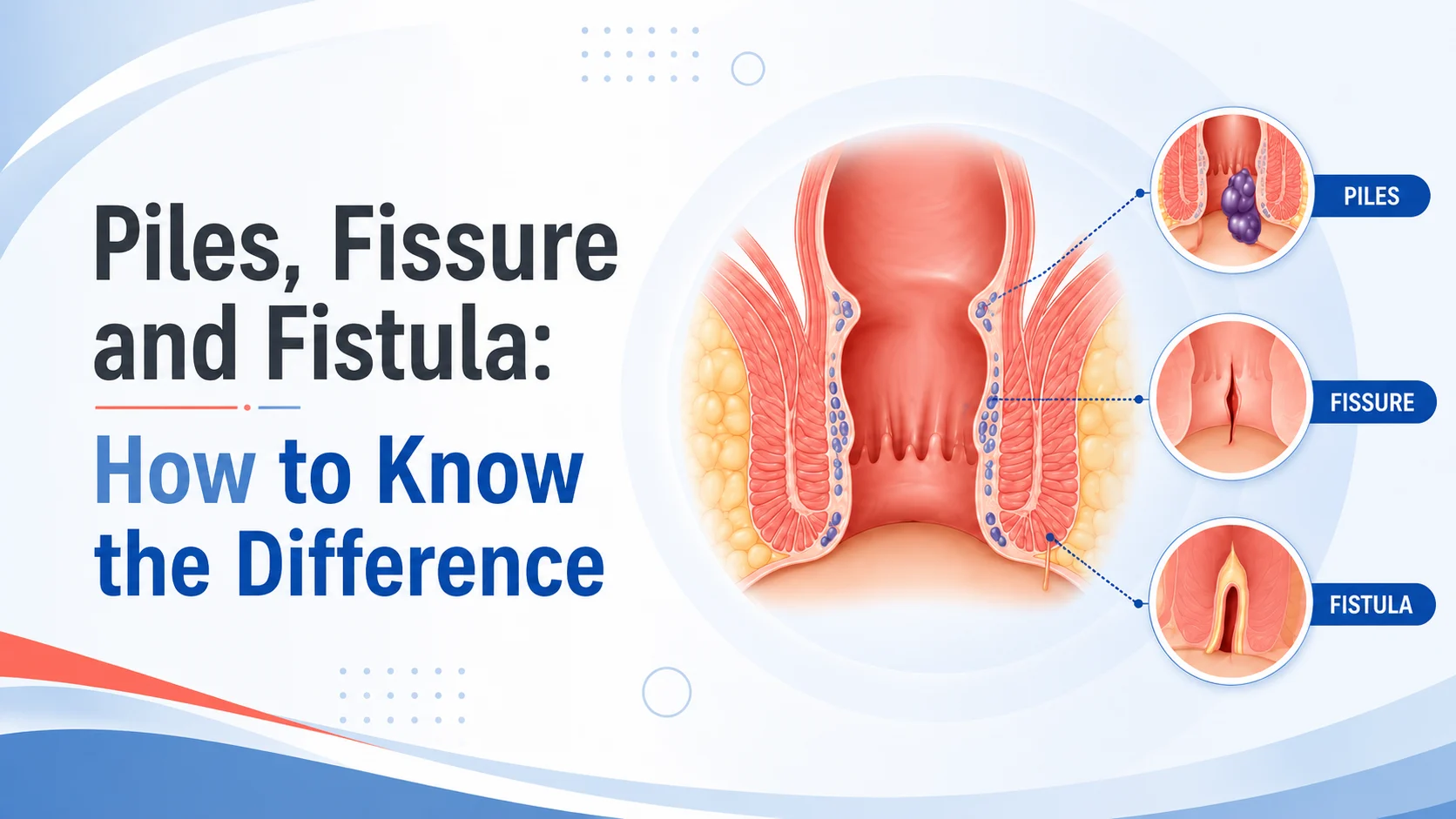
Pain, bleeding or swelling around the anus can be uncomfortable and worrying. Three common conditions that may cause symptoms in this area are piles, anal fissure and anal fistula. Because some symptoms overlap, people often confuse one condition with another. Understanding piles vs fissure vs fistula can help a person recognise the possible problem, but a proper diagnosis still needs a medical examination.
The treatment for each condition is different. Piles are swollen blood vessels, a fissure is a tear in the skin, and a fistula is an abnormal tunnel linked with infection. This is why every episode of anal pain or bleeding should not automatically be called piles.
Piles vs Fissure vs Fistula: Quick Difference
| Condition | What It Is | Common Symptom | Typical Clue |
|---|---|---|---|
| Piles | Swollen blood vessels in or around the anus | Bleeding, itching or a lump | Bright red bleeding or swelling |
| Fissure | A small tear in the skin of the anus | Sharp pain during bowel movement | Burning pain after passing stool |
| Fistula | An abnormal tunnel between the anal canal and nearby skin | Discharge, swelling or throbbing pain | Repeated pus or fluid from an opening near the anus |
These are general patterns rather than strict rules. A person may have more than one condition at the same time. For example, constipation may contribute to both piles and a fissure. A doctor can identify which condition is actually causing the symptoms.
What Are Piles?
Piles, also called haemorrhoids, are swollen blood vessels inside or around the anus. Internal piles develop inside the anal canal or lower rectum and may cause bright red bleeding during or after a bowel movement. External piles develop around the anal opening and may cause swelling, itching, discomfort or a lump.
Constipation, repeated straining, sitting on the toilet for a long time and pregnancy can increase pressure in the veins. Some people have mild piles that settle with changes in bowel habits, while others have repeated bleeding or prolapsing piles that need medical treatment.
Patients who have symptoms of haemorrhoids can learn more about piles treatment at Kapadia Hospital.
What Is an Anal Fissure?
An anal fissure is a small tear in the skin at the anal opening. It often develops after passing a hard or large stool. Severe or repeated diarrhoea can also irritate the area. The most typical symptom is a sharp, cutting pain while passing stool. A burning or aching pain may continue for some time afterwards.
A small amount of bright red blood may be seen on toilet paper or on the outside of the stool. This pain pattern is a useful clue when comparing piles and fissure. Internal piles can bleed without severe pain, while a fissure commonly causes noticeable pain with bowel movements.
More information is available on anal fissure treatment at Kapadia Hospital.
What Is an Anal Fistula?
An anal fistula is different from both piles and fissure. It is a small abnormal tunnel that develops between the anal canal and the skin near the anus. It commonly forms after an anal abscess or infection. When an abscess drains, a small channel may remain and continue to produce discharge.
Symptoms can include repeated pus or fluid discharge, a small opening near the anus, constant or throbbing pain, swelling, redness, skin irritation and sometimes fever. The discharge may stop for a while and then return if the opening becomes blocked and fills again.
Patients with persistent discharge or recurrent abscesses can read about fistula treatment at Kapadia Hospital.
Which Condition Causes Bleeding?
All three conditions may cause some bleeding, but the pattern can be different. Piles commonly cause bright red bleeding during or after bowel movements. A fissure usually causes a smaller amount of bright red blood together with sharp pain. A fistula may sometimes cause blood mixed with pus or fluid.
Rectal bleeding should not automatically be assumed to be piles. Other bowel and rectal conditions can also cause bleeding. Persistent, heavy or unexplained bleeding should be assessed by a doctor.
Which Condition Causes the Most Pain?
The type of pain can provide an important clue in piles vs fissure vs fistula. A fissure often causes sharp pain while passing stool followed by burning pain. A fistula can cause constant or throbbing pain, particularly if an abscess or infection is present. Piles may cause itching, pressure and discomfort, although an external thrombosed pile can become very painful.
How Are Piles, Fissure and Fistula Diagnosed?
A doctor usually begins by asking about bleeding, pain, constipation, discharge, swelling and how long the symptoms have been present. The anal area may then be examined. Depending on the suspected condition, a gentle rectal examination or a small instrument may be used to inspect the anal canal.
For a fistula, additional tests may sometimes be needed to understand where the tract runs. MRI or other imaging can help map complex fistulas before treatment. The goal is to identify the complete tract while protecting the muscles that control bowel movements.
How Is Piles Treated?
Early piles may improve by keeping stools soft, eating enough fibre, drinking sufficient water and avoiding straining. Medicines may be prescribed to control symptoms. When piles continue to bleed, prolapse or cause repeated problems, procedures such as banding, laser treatment or surgery may be discussed depending on the grade and type of piles.
How Is an Anal Fissure Treated?
Many recent fissures improve when constipation is corrected. Fibre, fluids, stool-softening measures and warm sitz baths may help. Doctors may prescribe ointments that relax the anal muscle and allow the tear to heal. If the fissure becomes chronic and does not improve, additional procedures or surgery may be considered.
How Is an Anal Fistula Treated?
A fistula often needs a procedure because the abnormal tract can remain even when the external opening appears to close. The exact treatment depends on where the fistula runs and how close it is to the anal sphincter muscles. Options may include fistulotomy or other sphincter-preserving procedures in suitable cases.
Can Constipation Cause All Three?
Constipation and straining are closely linked with piles and fissures. Hard stool can tear the anal skin and create a fissure, while repeated straining can increase pressure on haemorrhoidal blood vessels. A fistula is different because it is more commonly related to an infection and anal abscess rather than constipation itself.
Can Piles Turn Into a Fistula?
Piles do not normally turn into a fistula. They are two different conditions with different causes. A fistula usually forms after infection in an anal gland or after an abscess. A person can have piles and a fistula at the same time, but one does not usually change into the other.
When Should You See a Doctor?
See a doctor if bleeding keeps returning, pain is severe, a lump does not settle, there is pus or foul-smelling discharge, or symptoms continue despite basic home care. Prompt medical attention is important for severe anal pain with fever, rapidly increasing swelling, heavy bleeding or feeling very unwell.
Why Correct Diagnosis Matters
Self-treatment can delay the right care when the condition has been identified incorrectly. Cream used for piles will not treat an anal fistula, and repeated treatment for piles may not solve the sharp pain of a chronic fissure. A short examination can often clarify the diagnosis and help the doctor recommend the most suitable treatment.
Frequently Asked Questions
How can I tell piles and fissure apart?
Piles commonly cause bleeding, itching or a lump. A fissure more typically causes sharp pain while passing stool followed by burning pain.
Is fistula the same as piles?
No. Piles are swollen blood vessels. A fistula is an abnormal tunnel between the anal canal and the nearby skin.
Can piles turn into fistula?
Piles do not normally turn into a fistula. Fistulas are commonly linked with an anal infection or abscess.
This article is for general awareness only. It does not replace a consultation, examination, diagnosis or treatment by a qualified doctor.